The "Science Diaspora for Ukraine" program brings together Ukrainian scholars and research hubs with experienced mentors - Ukrainian researchers and professionals based abroad. The mentorship is focused on professional development, international collaboration, joint research and grant initiatives, and expanding academic networks.
The program runs in two formats: individual mentorship for Ukrainian scholars and mentorship for research hubs.
Why this program?
To help Ukrainian scientists find new professional directions
To expand access to global scientific networks and opportunities
To support those who work in Ukraine during the war
To strengthen cooperation between Ukrainian and international researchers
The mentorship program runs in three-month cycles in the format of regular online meetings. Under individual mentorship, a mentor and mentee work together on the participant's professional and research goals. Under mentorship for research hubs, a mentor works with the hub team on defined development goals: international collaboration, joint research, publications, grant applications and partnerships. Recruitment and cycle dates are announced separately.
Mentorship for research hubs
In 2026-2027, Ukrainian Science Diaspora is launching a dedicated mentorship track for research hubs created on the platform.
Two three-month waves are planned:
Wave I - November 2026 - January 2027
Wave II - February - April 2027
During each wave, selected hubs will work with mentors from the Ukrainian science diaspora on specific development goals: international partnerships, joint research, grant applications, publications, academic networking and other joint initiatives. To participate, the team must create a research hub on the Ukrainian Science Diaspora platform and apply to the corresponding mentorship wave.
Participation in the mentorship program requires active, responsible, and ethical engagement between mentors and mentees throughout the entire program cycle.
Who can be a mentor
A mentor can be an experienced professional or researcher working in an academic or professional environment outside Ukraine, with relevant expertise and a willingness to support the professional development of Ukrainian scientists.
Who can be a mentee
Mentees can be Ukrainian scientists based in Ukraine who seek professional support, career guidance, research skills development, assistance with publications, grant applications, or international collaboration.
Principles of participation
Participation in the program is based on:
mutual respect;
responsibility for communication;
adherence to agreed arrangements;
confidentiality;
openness to constructive feedback;
interest in collaboration and professional development.
Expectations of mentors
share professional experience and recommendations;
help participants better define their development goals;
provide constructive feedback;
support professional dialogue within the program.
Expectations of mentees
actively engage in communication and interaction with their mentor;
independently maintain communication and coordinate meetings;
come to meetings prepared;
respect the mentor's time;
follow agreed arrangements and maintain professional communication.
In case of changes or difficulties
If a planned meeting cannot take place, the party canceling the meeting should inform the other party in advance and agree on a new time. If any communication or interaction difficulties arise during participation in the program, participants may contact the program coordinators for support.
Important
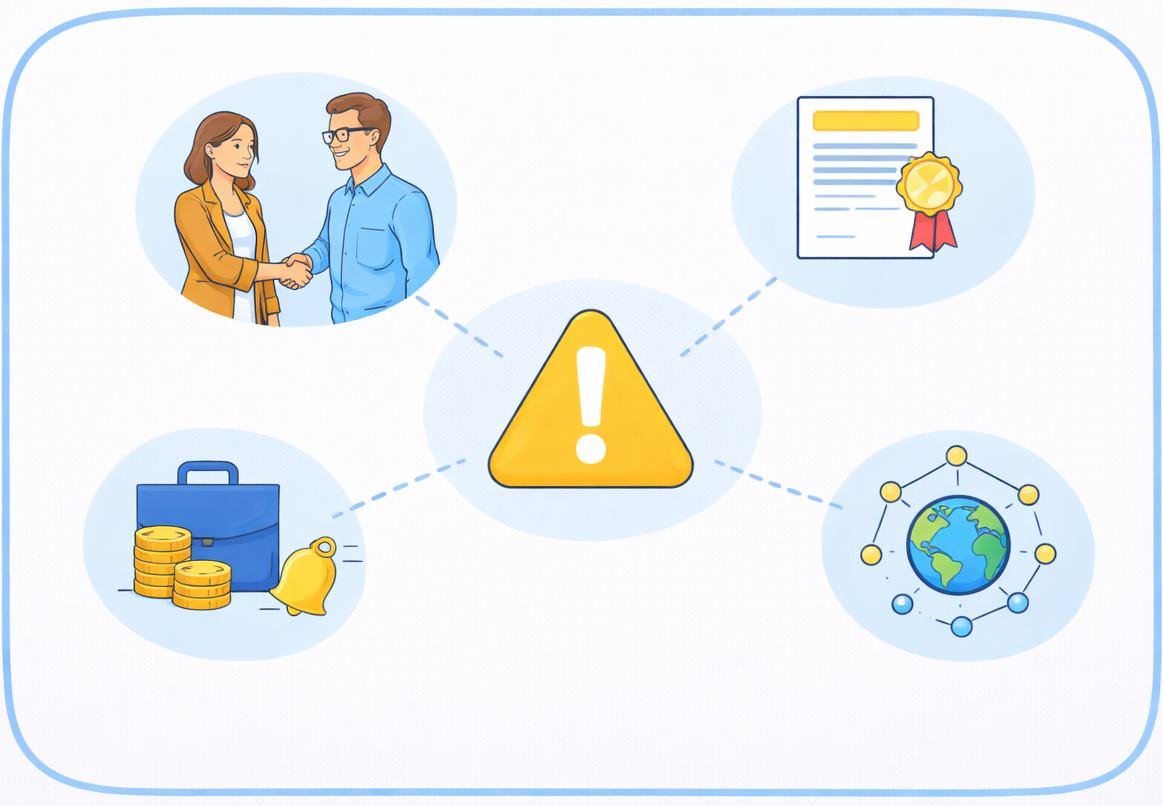
The mentorship program does not guarantee employment, funding, or any other specific outcomes, but it creates opportunities for professional development, new connections, and international collaboration.
Read more details
More detailed recommendations for mentors and mentees are available in the program guide. Guide for mentors and mentees
Rules for hub mentorship
Participants in this track are teams of research hubs registered on the Ukrainian Science Diaspora platform. Each hub designates a contact person who coordinates communication with the mentor and the program team. At the start of the cycle, the hub and its mentor define the goals and collaboration plan for three months. The hub team takes part in agreed online meetings, follows the agreed steps and maintains regular communication with the mentor. The mentor provides expert feedback, helps set realistic goals, and supports the hub's international collaboration and research initiatives.
Next phase: mentorship for research hubs
Two three-month waves of hub mentorship are planned in 2026-2027:
Wave I - November 2026 - January 2027
Wave II - February - April 2027
Research hubs created on the Ukrainian Science Diaspora platform can take part. During three months the hub will work with a mentor on defined goals and development areas.
Yurii Lukianchuk
together with his mentor Oleksandr Novykh achieved the following results:
- a cooperation agreement between Lutsk National Technical University and the University of La Laguna, which is in the process of being signed.
- a joint presentation at a scientific conference scheduled for the end of June 2025.
- a teaching course on the use of artificial intelligence is being developed. This course will be delivered in Spanish and Ukrainian.
Uliana Zbezhkhovska
together with her mentor Dmytro Chumachenko published a scientific article in Computation (Scopus, Q2). The publication was a result of their collaboration within the mentorship program and is dedicated to researching the impact of smoothing methods on the accuracy of COVID-19 forecasting.
Ivanna Prylutska
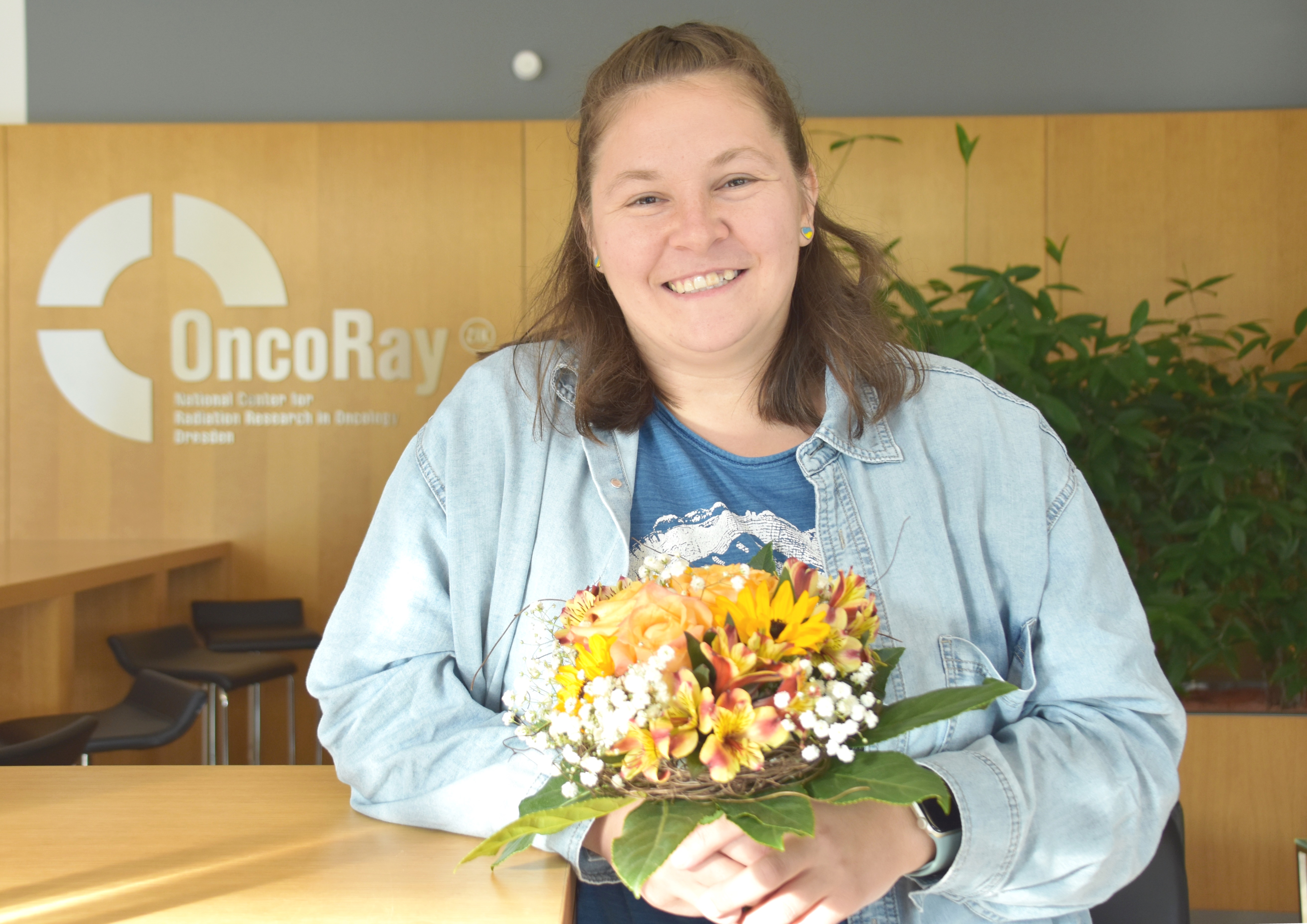
together with mentor Yelyzaveta Horodetska (OncoRay – National Center for Radiation Oncology Research, Germany) achieved such an outcome of cooperation as the FEBS research fellowship to conduct a research internship at a leading international laboratory in the Czech Republic.
1.03 Physical sciences and astronomy, 1.04 Chemical sciences, 2.05 Materials engineering
Germany
1 / 1
Feedback
Olha Riabkova
Senior Lecturer at the Department of Marketing and Logistics, Lviv Polytechnic National University
Participation in the program became an important stage in my work. Thanks to my mentor's support, I learned to work according to Western scientific standards and gained the opportunity to reach the international level. This experience helped me change my approach to research and, I hope, find my professional path.
Liudmyla Yeliseieva
Professor, Lesya Ukrainka Volyn National University
Participation in the mentorship program became a valuable experience of professional and personal development for me. Especially useful was the collaboration with my mentor, which helped me look at the possibilities of international scientific cooperation, academic career development, and the preparation of research projects from a new perspective. The program created a quality environment for exchanging experience, building new professional contacts, and receiving practical advice from experienced scientists. I am convinced that such initiatives strengthen the ties between Ukrainian researchers in Ukraine and abroad.
Anna Kornyliuk
For me, participation in the mentorship program was very useful. My mentor, Inna Melnykovska, is an experienced researcher with a scientific field in common with mine, which made our collaboration especially productive. During the program, I took part in joint academic events, submitted an application for a conference, and we have plans for a joint publication. She also introduced me to other researchers, which has already grown into a separate joint project. In my opinion, this program is a useful initiative that creates genuine scientific partnerships, and I sincerely recommend it.
Nataliia Khomiuk
Head of the Management Department, Lesya Ukrainka Volyn National University
Participation in the 'Science Diaspora for Ukraine' program became a valuable experience for professional and academic development. Collaboration with Olha Zadorozhna provided the opportunity to receive practical recommendations regarding the development of educational programs, internationalization, and the implementation of modern digital tools in the educational process. Establishing international professional contacts and holding joint educational events was especially valuable. The program is an important platform for developing cooperation between Ukrainian scientists and representatives of the scientific diaspora.
Liudmyla Bezuhla
Doctor of Economics, Professor, Head of the Department of Tourism and Enterprise Economics, Dnipro University of Technology
The 'Science Diaspora for Ukraine' mentorship program became that case for me when academic communication goes beyond formal meetings and turns into a living exchange of ideas, contacts, and opportunities. Together with my mentor, we managed not just to talk about science, but to find real vectors of joint research, international cooperation, and guest lectures. It was a charge of professional energy, new meanings, and the feeling that Ukrainian science has a powerful circle of support in the world.
Assoc. Prof. Dr. Yana Bilynets
Researcher, School of Economics and Business, University of Ljubljana, Slovenia
For me, the program became an opportunity to find colleagues from Ukraine, which is very valuable, because I have been abroad for a long time and have never been part of the academic community at home. In our collaboration, the division between mentor and mentee is conditional, because it was a mutual exchange, and I hope it will continue after the program.
Dr. Valentyn Mohylyuk
Leading Research Group, Faculty of Pharmacy, Rīga Stradiņš University, Latvia
Through dialogue between Ukrainian scientists abroad and in Ukraine, the program allows: Ukrainian scientists from abroad to share their experience, and Ukrainian scientists to understand the differences in the organization of certain near-scientific processes and to see possible paths for adaptation.
Oleksii Buznyk
A great opportunity for Ukrainian scientists to share experience and expand professional connections.
Mariia Heletii
Member of the Advisory Board of the International Diplomatic Initiative
The Ukrainian Science Diaspora mentorship program became a wonderful opportunity to exchange experience and expand the network of contacts. Thanks to substantive collaboration and support, I received new ideas for further professional activity. I sincerely thank the organizers for creating such an important platform for Ukrainian professionals around the world.
Inna Olesenko
PhD in Economics, Associate Professor of the Department of Innovative Economics and Digital Technologies, Vinnytsia Institute of Trade and Economics of the State University of Trade and Economics
Participation in the 'Science Diaspora for Ukraine' mentorship program became a powerful impulse for professional growth. Over three months of intensive work on an individual schedule together with my mentor, Doctor of Economics, Professor Svitlana Yermak, we went the way from discussing an idea to a fully completed scientific article. Such a format of synergy and support is extremely valuable for the development of Ukrainian science in modern realities. I sincerely thank the organizers for this unique experience, great networking, and the opportunity to scale my own scientific horizons.
Dr. hab. Olha Matveieva
Dnipro University of Technology / Paderborn University
Together with the talented and purposeful journalist Mariia Frei, we developed a vision and action plan for entering doctoral studies and developing transformative-oriented scientific work on gender-sensitive journalistic activity in crisis conditions. In the field of international media research, this topic promises to shed light on internal and systemic issues of conducting journalistic investigations under pressure, therefore highlighting and strengthening the role of women in these processes is an important contribution both to the field of global media studies and to the feminist agenda.
Olha Naumenko
PhD in Political Science, Associate Professor of the Department of Political Technologies, Vadym Hetman Kyiv National Economic University
During the mentorship program, I received very valuable suggestions and comments regarding my Jean Monnet Module project application: all aspects of the project application were analyzed for further adjustments. Meetings with my mentor Mariia Heletii inspired me to further international cooperation in project activities and the development of my language competencies.
Olena Pokotylo
Associate Professor, Ternopil National Medical University
Within the framework of the program, I had the opportunity to work under the mentorship of a leading Ukrainian scientist in pharmacy, who works at the pharmaceutical college of the University of Manitoba (Canada), Associate Professor Ivan Yurchenko. I express sincere gratitude to my mentor for professional support, openness to cooperation, and creating opportunities for engaging students in the international scientific environment. Special words of gratitude go to the organizers of the 'Science Diaspora for Ukraine' mentorship program and the Ukrainian Science Diaspora initiative for developing effective mechanisms of interaction between Ukrainian scientists in Ukraine and abroad.
Oleksandr Mostovyi
PhD student
Participation in the Ukrainian Science Diaspora mentorship program became a truly valuable experience for me, which helped expand professional horizons and look at my own research from a new angle. Regular collaboration with my mentor provided not only practical advice on career and scientific development, but also a sense of support from a community of like-minded people abroad. I sincerely recommend this program to everyone who seeks to grow professionally and build strong ties in the Ukrainian scientific environment.
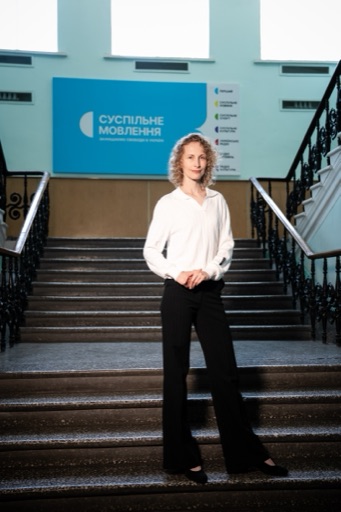
Mariia Frei
Board Member of the Public Broadcasting Company of Ukraine
The program helped me take the first conscious step from professional practice to an academic career. Together with my mentor, we developed a research proposal, formed my academic profile, and defined a plan for further actions. Thanks to this, I have already received interest from European professors and invitations to apply for open competitions. For me, this became the beginning of a new professional stage and confirmation that practical experience can become the basis for high-quality academic research.
Liudmyla Mosula
Associate Professor of the Department of Pharmaceutical Chemistry, I. Horbachevsky Ternopil National Medical University
I am sincerely glad that I took part in the 'Science Diaspora for Ukraine' program. It allowed me to establish contacts with my mentor Valentyn Mohylyuk, adopt his experience in writing and submitting international grant applications, writing a CV, and other professional advice. Our video meetings were regular and productive. Special thanks to the project organizers for the opportunity to participate and expand my scientific contacts. This is extremely valuable for Ukrainian scientists.
Yurii Karpenko
Associate Professor of the Department of Toxicological and Inorganic Chemistry, Zaporizhzhia State Medical and Pharmaceutical University
Participation in the Ukrainian Science Diaspora mentorship program became a valuable professional experience for me, combining constructive communication, scientific dialogues, and practical advice. Especially useful was the analysis of European grant applications, their structure, and submission features. Thanks to cooperation with my mentor, I received important recommendations for preparing a grant application for the competition of joint Ukrainian-Latvian research projects for implementation in 2027–2028. The program contributed to a deeper understanding of international scientific competitions and became an important step in my professional development.
Svitlana Yermak
Doctor of Economics, Professor
I took part in the Ukrainian Science Diaspora mentorship program as a mentor. My impressions of the program are only positive. I managed to establish fruitful cooperation with my mentee (a talented and promising young researcher), and we have the result in the form of a prepared scientific article and new ideas for further research. I want to note the high level of program organization and the undoubted value for the development of Ukrainian science and international connections.
FAQ
Who can participate in the program as a mentee?
Any Ukrainian researcher working or studying in Ukraine who needs professional support: PhD students, scientists, lecturers, researchers at universities or institutes.
Can a research hub take part in the program?
Yes. In 2026-2027 a dedicated mentorship track for research hubs registered on the Ukrainian Science Diaspora platform is running.
Does the hub need to exist before applying for mentorship?
Yes. To take part in hub mentorship, the team must create a hub on the platform and meet the conditions of the corresponding recruitment round.
Who works with the mentor on the hub's side?
The mentor works with the hub team. For organisational communication the hub designates a contact person, but other team members can join the working meetings depending on the mentorship goals.
What topics can a hub work on with a mentor?
International partnerships, joint research, grant applications, scientific publications, academic networking, research-team development and other goals agreed at the start of the cycle.
Who can become a mentor?
A mentor can be a Ukrainian scholar living or working abroad, with experience in science, international cooperation, project writing, grants, publications, and who is ready to share knowledge and support colleagues from Ukraine.
What is the duration of the program?
Each cycle of the mentorship program lasts 3 months. Recruitment and cycle dates are announced separately. For research hubs, two waves are planned in 2026-2027: November 2026 - January 2027 and February - April 2027.
How often should meetings take place?
We recommend 1-2 online meetings per month. If needed, the mentor and mentee/hub team can agree on a different frequency.
Is there a fixed schedule or training modules?
No. The program is based on an individual approach. The mentor–mentee pair defines the goals and format of interaction based on the mentee’s real needs.
What topics can be discussed during mentorship?
Publication preparation, academic writing, grant applications, career development, mobility, international cooperation, course development, participation in conferences, etc.
Can I participate again?
Yes. If the previous cycle was helpful, you can apply again. We will take your previous experience into account when forming new pairs.
What is the mentee selection procedure?
Mentee selection is based on a completed application form where participants describe their scientific experience, professional development needs, and program expectations. After analyzing the applications, the program team creates a list of recommended candidates and conducts selection according to mentor profiles. Priority is given to Ukrainian scientists who continue to work in Ukraine during the war and need support for their research career development.
How does mentor-mentee pairing work?
After collecting applications and basic assessment of mentee needs, coordinators perform manual pairing, considering shared scientific interests, mentor experience, and stated mentee goals. Each pair receives an individual cooperation plan (Mentoring Action Plan) that defines goals, meeting frequency, and key development areas – from publications and grants to expanding international collaboration.
What is expected from a mentor?
A mentor is expected to actively participate in the program, be willing to share experience and support the mentee in professional development. The mentor helps define goals, provides advice on writing scientific articles, participating in conferences, preparing grant applications, and facilitates networking with international scientific colleagues. The mentor maintains a friendly, equal atmosphere and informs organizers of any difficulties.
What is expected from a mentee?
A mentee should take responsibility for program participation, actively participate in meetings, implement agreed steps from their Mentoring Action Plan, and be open to advice. It's important to come to meetings prepared, formulate questions, follow the schedule, and demonstrate initiative in personal professional development.
What can participation in the program provide?
Program participation provides Ukrainian scientists with the opportunity to receive individual support, improve academic writing skills, grant preparation, international communication, and career planning. Mentors, in turn, gain experience in international mentoring, develop leadership and communication skills, and have the opportunity to contribute to the restoration of Ukrainian science through knowledge sharing.
What is the algorithm for involving mentors and mentees?
1. Announcement of mentor and mentee recruitment on the official website and program social networks. 2. Submission of applications specifying scientific interests, experience, and expectations. 3. Application analysis and manual pairing by program coordinators. 4. Conducting an orientation session for mentors and mentees. 5. Formation of a Mentoring Action Plan for each pair. 6. We recommend 1-2 online meetings per month. If needed, the mentor and mentee/hub team can agree on a different frequency. 7. Participation in Career Advice Sessions and completion of short feedback surveys. 8. Program completion with final self-assessment and future recommendations.
How does the program address issues of academic integrity, copyright, and conflict of interest?
The program adheres to principles of academic integrity that ensure honesty, transparency, and respect for intellectual work. Mentors and mentees receive recommendations on proper citation, avoiding plagiarism, and respecting copyrights. All materials created within the collaboration remain the intellectual property of their authors. Regarding conflict of interest, participants are encouraged to be open and transparent: they should report any circumstances that may affect the objectivity or independence of collaboration. If such situations arise, program coordinators help find optimal solutions. The program is based on mutual trust, respect, and transparency, and all ethical aspects are regulated through open communication between participants and coordinators.